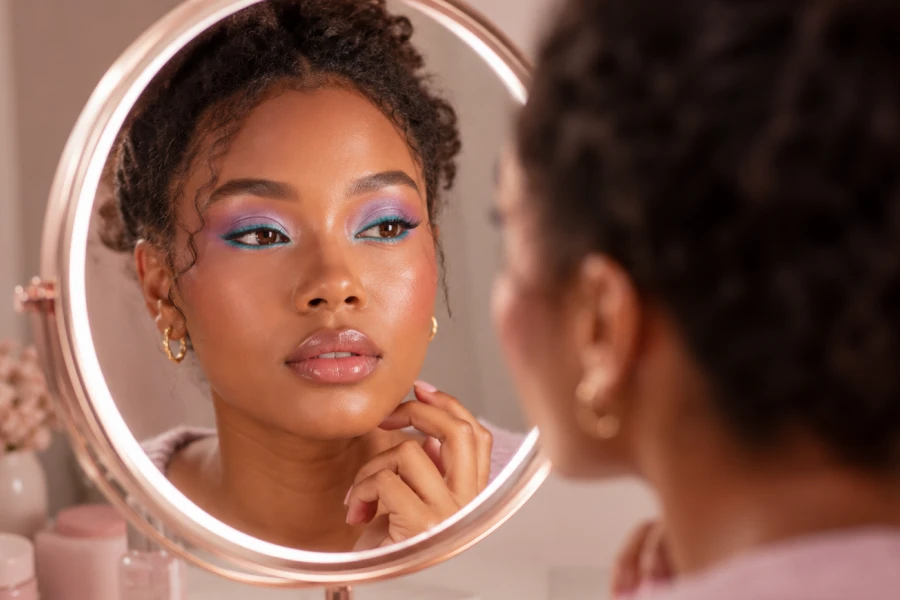
The eye area rewards imagination quickly. One line can change an entire expression. Still, bold eye makeup ideas need structure before pigment. Shape tells color where to belong. Without shape, brightness can look unfinished. With shape, even unusual shades feel refined. Start by studying your lid space. Then choose a direction that flatters movement. A creative eye color strategy can simplify that choice. The best eye looks feel brave and controlled.
Shape should come before shade intensity. Rounded eyes may enjoy smoky halos. Hooded lids often need lifted placement. Almond eyes can carry elongated color beautifully. Deep-set eyes may prefer brightness near the center. Monolids can make graphic color feel striking. Lower lash detail can balance larger lids. Negative space can keep drama crisp. These choices make the eyes look designed. They also prevent the makeup from closing the eye.
Brows deserve special attention with expressive eyes. Too much brow darkness can crowd the color. Too little shape can make the look unfinished. Brush hairs upward before filling sparse areas. Use light strokes near the front. Keep the tail clean and controlled. This frames the lids without stealing focus. Brow balance also helps photos look sharper. The face reads polished from farther away. Detail turns color into style.
Color needs a job before sparkle arrives. Teal can sharpen brown eyes beautifully. Lilac can soften a strong liner. Tangerine can warm the whole face. Cobalt can feel modern with bare cheeks. Emerald brings richness without heavy darkness. Choose one leader and one supporting shade. A statement eyeshadow map helps control that pairing. Glitter should arrive only after placement works. Shine cannot fix a confused color story.
Blending time should match the pigment strength. Vivid shadows need smaller movements at first. Pastels need buildable pressure and patience. Deep colors need clean transitions. Wiping a brush between shades prevents dullness. A neutral transition shade can soften edges. It should not cover the main color. Use the mirror from several angles. Lid folds can hide uneven spots. Careful blending makes bravery look effortless.
The lash line keeps bright eyes wearable. A tight line adds quiet definition. Mascara creates a familiar frame. Brown liner softens strong pastels. Black liner sharpens jewel tones instantly. Smudged liner makes color feel relaxed. Liquid liner makes it feel graphic. The choice depends on the planned mood. Strong lashes also prevent shadow from floating. This small detail makes bold color feel finished.
Touchups should stay tiny and strategic. Carry a cotton swab for sharp edges. Keep a small brush for fallout. Avoid adding more shadow everywhere. Refresh only the area that faded. Press shimmer back onto the center if needed. Rework liner only when it cracks. Let the rest remain lived-in. Perfect symmetry is not always necessary. Freshness matters more than constant correction.
The surrounding face should not compete loudly. Skin can look fresh and lightly perfected. Brows need structure without stealing attention. Cheeks can echo undertones softly. Lips may stay clear, rosy, or blurred. Too many statements weaken the eye story. A calm base makes color appear more luxurious. It also lets mistakes feel less obvious. Restraint can be surprisingly dramatic. The whole face becomes a frame.
Primer should solve a specific problem. Oily lids need better grip. Dry lids need smooth preparation. Creasing needs thin layers and patience. Pigment fallout needs controlled placement. Not every look needs the same base. Too much primer can create texture. A small amount often works better. Let it set before shadow arrives. Prepared skin makes strong color behave.
Lighting changes bold color more than people expect. Bathroom light can flatten shimmer quickly. Sunlight reveals uneven blending. Evening light makes pastels look softer. Phone flash can exaggerate texture. Test the look in two settings. Adjust edges before leaving home. Use colorful beauty inspiration to plan for the occasion. A photo check can reveal balance. Real-world testing protects the final effect.
Lower lash color can change the whole mood. A soft wash feels playful. A sharp line feels editorial. Matching the lid can look cohesive. Contrasting it can look artistic. Keep the inner corner clean. Avoid dragging color too low. Blend only until the shape feels intentional. Mascara can reconnect the lower detail. This area adds drama without covering the lid.
Repeatability turns experimentation into personal style. Note which brush handled the color best. Keep the same base products nearby. Record the order of application. Remove one step that felt unnecessary. Save the most flattering shade combination. The next attempt will feel faster. Practice also builds steadier edges. Over time, daring eyes become less ceremonial. They become another confident option.


Leave a comment