
Length goals often sound like a product problem. In reality, retention depends on repeated behavior. Stronger hair habits make those behaviors visible. They turn hair care into a pattern. The pattern should support your lifestyle. Otherwise, even smart advice fades quickly. Hair needs steady protection between wash days. Scalp care also needs practical attention. A stronger strands routine can connect both needs. Small habits decide how much length remains.
Nutrition influences hair through the whole body. Meals need protein more than perfection. Iron-rich foods can support normal growth cycles. Healthy fats help many routines feel sustainable. Water supports comfort and overall function. Extreme restriction can make hair goals harder. Supplements should never replace balanced eating. Consistency matters more than dramatic changes. The plate becomes part of the beauty routine. That mindset makes care feel more complete.
Habit stacking can make hair care less demanding. Place scalp massage beside evening skincare. Keep a satin scrunchie near the bed. Put a water bottle on the vanity. Store detangling tools with conditioner. These small pairings reduce effort. They also make consistency feel automatic. The routine becomes part of normal life. Success no longer depends on motivation. Design carries the habit forward.
Styling habits can protect or sabotage progress. Use tools that match your texture. Detangle only when hair has enough slip. Avoid tension in the same areas. Rotate buns, braids, and parts. Reduce heat when dryness appears. Add moisture before hair feels crunchy. A hair breakage recovery plan helps identify weak spots. Gentle styling still allows beauty. It simply asks for better timing.
Breakage prevention also needs realistic beauty standards. Sleek styles can create too much tension. Volume may protect hair better some days. Frizz is not always failure. Texture often signals movement and softness. Choose styles that respect the strand. Save demanding looks for important moments. Give hair easier days afterward. This balance supports confidence and health. Beauty should not require constant strain.
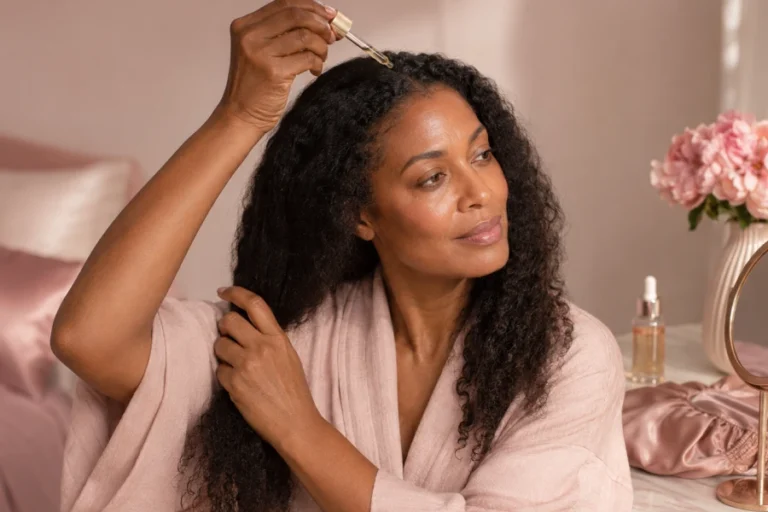
The scalp needs care without constant interference. Cleanse when buildup blocks comfort. Massage lightly when it feels good. Avoid scratching irritated areas aggressively. Keep oils moderate and purposeful. Heavy layers can trap debris quickly. Notice flakes, tightness, and tenderness. Those signs deserve adjustments, not panic. A calm scalp supports routine consistency. Consistency supports better length retention.
Community advice needs thoughtful filtering. Not every viral routine fits every head. Texture, density, health, and schedule all differ. Use inspiration without surrendering judgment. Test one habit at a time. Keep the ones that reduce friction. Ignore trends that create discomfort. Your results matter more than popularity. Personal evidence should lead the plan. That approach protects both hair and patience.
Nighttime often decides morning manageability. Loose hair can rub against fabric. Cotton pillowcases may increase friction. Satin or silk can soften that contact. Protective wraps should never feel tight. Loose braids can reduce tangling. Wet hair needs careful support before bed. Heavy clips can press into roots. Sleep should protect the day’s work. A comfortable setup makes success easier.
Scissors can support long-term goals. Trims do not make hair grow faster. They can stop splits from traveling. Tiny cleanups preserve a fuller shape. Waiting too long can cost more length. Schedule trims by hair condition, not fear. Look for transparent or rough ends. Choose a stylist who respects goals. A careful trim can feel strategic. Length looks better when ends stay strong.
Tracking should clarify, not create anxiety. Take monthly photos in similar light. Note breakage without counting every hair. Record changes after new products. Watch how ends behave after trims. Keep notes about stress and nutrition. Patterns appear when emotions settle. Use a hair growth and nutrition tracker for gentle accountability. Data should support calm choices. It should never become another pressure.
Mindset influences consistency more than people admit. Shame creates avoidance around routines. Pressure can lead to overcorrection. Curiosity supports better experiments. A missed night does not ruin progress. Return gently and keep moving. The goal is steadier care, not perfect behavior. Hair responds to averages over time. Kindness makes routines easier to continue. That emotional ease protects results.
Lasting habits need flexible standards. Some weeks will be less organized. That does not erase progress. Return to the core steps quickly. Protect ends, reduce friction, and nourish well. Those basics handle most setbacks. Add advanced steps only when useful. Hair care should fit a real calendar. Retention grows from steady returns. The strongest habit is beginning again. Let the routine change as hair changes. New growth may need different handling. Longer ends may need more protection. Keep observing without rushing. Adaptation makes habits stay useful.



Leave a comment